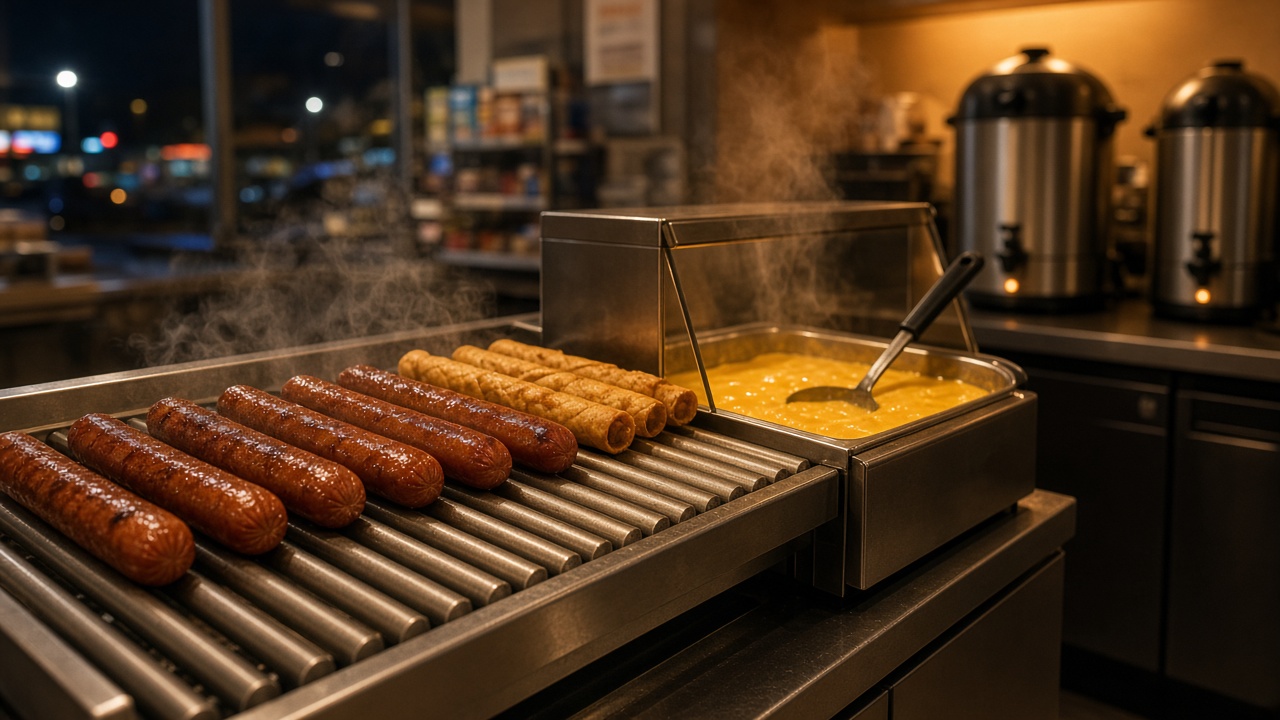
A Class I hits the roller grill before it hits the circular
OpenFDA ranks harm. A 2,800-square-foot box has no warehouse slack. The warmer is the first shelf that empties.
The FDA’s food-enforcement records are public. OpenFDA publishes them. A Class I recall, in the agency’s own language, means a reasonable probability that the product will cause serious adverse health consequences or death. Class II is reversible or remote harm. Class III is unlikely to cause harm. Those labels are not a journalist’s ranking. They are the triage order a convenience operator should use when a pull list lands during a lunch rush.
Grocery can absorb a Class I in a warehouse and a circular. Convenience cannot. A sandwich program, a grab-and-go salad, a roller-grill item, or a private-label snack that turns daily is already in the open cooler or on the warmer. There is no back-room case pack waiting for the next reset. By the time a corporate bulletin is formatted, a DSD stop two days earlier may have put the lot on a rural counter. That is why a food recall is a foodservice file on this desk, not a grocery sidebar with a pump in the lede.
Two agencies, one warmer
FDA covers most packaged foods, dairy, produce, and the prepared items that sit in a grab-and-go case. USDA’s Food Safety and Inspection Service covers meat and poultry under a parallel recall system. A hot-dog, a jerky stick, or a breakfast sandwich with a meat component is often an FSIS record, not an OpenFDA one. An operator who watches only the FDA feed will miss the SKU that is actually in the warmer. An operator who watches only FSIS will miss the salad and the dairy. The channel sells both. The desk reads both.
The enforcement dataset on OpenFDA runs back to 2004. It includes classification, product description, recalling firm, and the reason for the recall when the agency publishes one. It does not sort by channel. It does not say “convenience” or “travel center.” That cut is the reporter’s job: does the named product sell as a single-serve, a foodservice input, or a packaged snack that a c-store actually facings? If the notice is a club-pack grocery item that never reaches a fuel site, it is a different beat. If it is a sandwich, a dip, a bottled drink, or a meat stick, it is this one.
Why the box has no slack
A typical convenience box is a few thousand square feet. Foodservice programs are built for turn, not inventory. The roller grill, the open cooler, and the coffee island are merchandised to empty. That is the P&L. It is also why a Class I is operationally louder here than in a supermarket that can pull a pallet and keep the aisle looking full. Labor is the same crew that is already running the board. There is no separate recall team. The pull and the refund happen in front of the same customer who came in for fuel.
Private-label foodservice — a store-brand bun, a house chili, a banner dip — concentrates the risk. The chain owns the SKU. It also owns the phone call. National-brand pulls still matter; the DSD route does not wait for a grocery reset calendar. The difference is who the operator has to explain the empty slot to: a supplier, a banner, or a regular who bought the same sandwich yesterday.
How this desk files a recall
We cite the recall number, the classification, and the agency page. We name the product the notice names. We do not invent a distribution map the record does not support. We do not treat a Class III labeling error as a Class I health event. We do not wait for a grocery-trade exclusive to tell a c-store that a cooler SKU was pulled. If the item is a foodservice or snack product the channel sells, the file goes up with the agency citation attached.
The classification is the first sentence. The second sentence is whether the SKU sits on a grill, in an open cooler, or on a four-foot impulse set. That is the convenience-channel read. Everything else is a rewrite of a press desk the operator already has in a vendor portal.