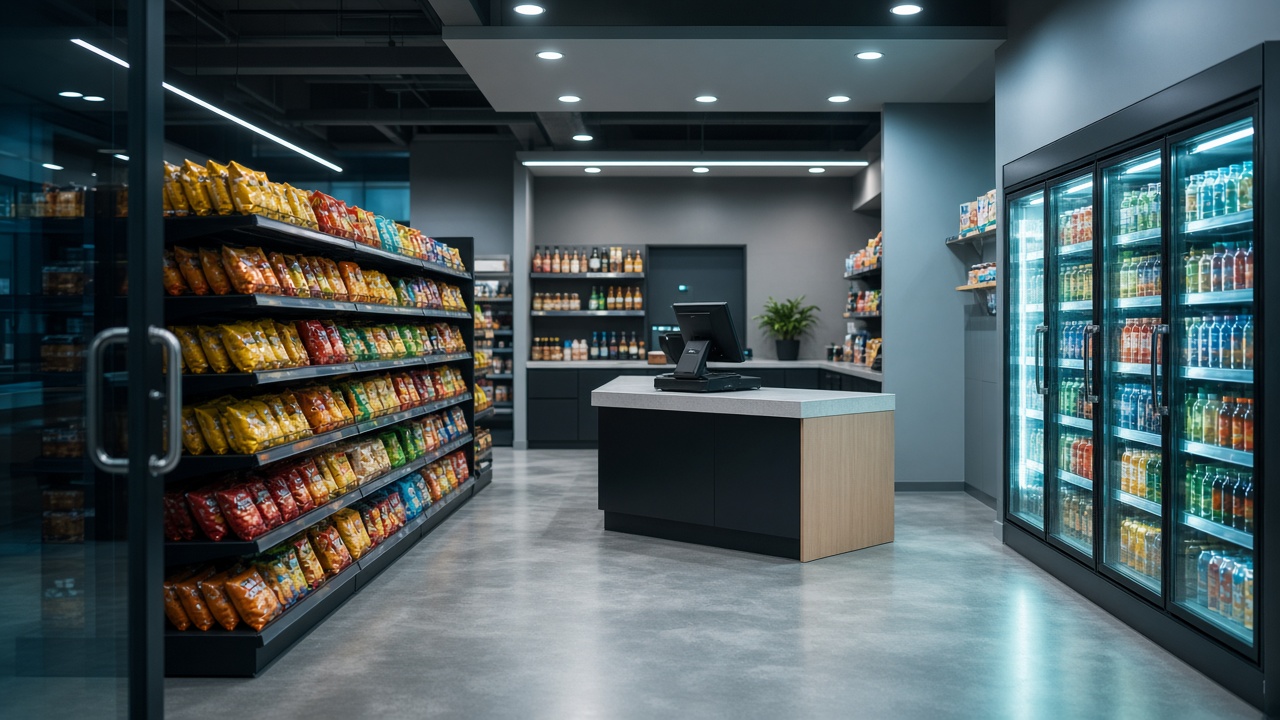
SNAP already runs through the fuel door
FNS retailer data is not a grocery sidebar. In a lot of counties the authorized door also sells gallons.
The USDA Food and Nutrition Service publishes retailer and redemption data for the Supplemental Nutrition Assistance Program. Convenience stores are a material share of authorized retailers in many counties, especially where the nearest supermarket is a drive. That is not a talking point. It is how the program is actually used. A large share of those doors also sell fuel. Treating SNAP as a grocery-only story is a category error the FNS tables do not support.
A fuel retailer that is SNAP-authorized is in the food business whether the category team thinks of itself that way or not. Eligible SKUs — milk, bread, infant formula, packaged grocery — sit next to tobacco and dispensed beverage. WIC, in states that authorize it at those doors, adds another inventory discipline. When Congress or USDA changes what can be redeemed, the planogram in a rural c-store moves before a suburban grocery reset does. The rule does not wait for a circular.
What FNS actually publishes
FNS releases data on authorized retailers and, in public summaries, on redemptions by retailer type. Convenience stores appear as their own category in those tables, distinct from superstores and supermarkets. The series is the federal government’s description of where supplemental nutrition dollars are spent. It is not a trade association ranking. It is not a culture-war prompt. It is a count of doors and, where published, of dollars.
The useful cut for this desk is geographic. In metro counties with dense supermarket coverage, the c-store share of authorized retailers still matters for trip type — the shopper who came for fuel and bought milk. In rural counties, the c-store may be the authorized door. Those are different merchandising problems that share a program. Collapsing them into “SNAP and convenience” as a single moral argument misses both. FNS is a retailer-authorization series first. Redemption totals, when published by retailer type, are the second cut. Neither one is a culture-war prompt.
The planogram is the compliance tool
SNAP eligibility is a SKU list, not a store format. Hot prepared food is generally ineligible. Cold packaged grocery can be eligible. That line runs through the same box that sells roller-grill items and dispensed beverage. A buyer who treats the whole foodservice board as SNAP-adjacent will fail an inventory review. A buyer who treats the whole grocery set as optional will fail the household that uses the store as a pantry. The channel has to run both.
Inventory discipline is the unglamorous part. Authorized retailers have to stock qualifying staples on a schedule the program recognizes. In a 2,800-square-foot box that footage comes out of something else — a secondary candy strip, a travel-size OTC, a fourth energy facing. When the eligible list changes, the reset is not a grocery circular drop. It is a facing decision made by the same person who is already pricing the pump.
How this desk uses the series
The same way we use EIA weekly retail gasoline and OpenFDA: as a citable federal series, attached to the markets it actually describes. We will not use SNAP as a proxy fight. We will not write as if convenience redemption is a rounding error the FNS tables do not show. We will not invent a county-level dollar figure the published tables do not support. We will ask whether the channel can still sell milk, bread, and infant formula when the rule changes — and whether the fuel door that is authorized to sell them still has the footage.
That is a store-operations file. It is also a food-accessibility file that happens to run through lots that sell gallons. The FNS data does not care which desk claims it. The operator who has to reset the cooler does — and the Monday EIA print does not pause while that reset is on the truck.